Home


License: https://creativecommons.org/licenses/by-sa/4.0/legalcode
What is Virtual Walking?
Virtual walking is defined by two parts. The first part is an actual activity. The second is the goal – a destination or distance. These elements can enable you to feel a sense of achievement without leaving home.
Unlike virtual reality, where you vicariously participate, virtual walking involves real world movement. Most people choose a form of walking as their activity, either in their neighborhood, in their living room or on a treadmill. Other people choose to complete a virtual walk by cycling (mobile or stationary), or using an elliptical or a rowing machine. Choose your favorite exercise!
It is important to set a goal when you “virtual walk”. Many virtual walking apps use a destination as a goal, and you achieve your goal when you arrive at your destination. My first goal was to “virtual walk” to Lethbridge. In a note pad, I wrote Lethbridge at the top of the page, and the total number of kilometers between Lethbridge and Medicine Hat (my current location). Each day, I would subtract the number of kilometers I walked from the grand total of this walk. For fun, I often included the names of small towns along the way as points of reference. At the end of the walk, I would write in big, bold letters the word Done. I had a great feeling of accomplishment. My next goals were “virtual walks” to Calgary and Edmonton. My current goal is a “virtual walk” across Canada via the “Myvirtualmission” app. In real life, I would not have the time, resources, or wherewithal to complete any of these walks. Through the activity of virtual walking, I can accomplish these walks from my living room.
Virtual walks can use distance as a goal. Individuals can sign up for 5 k, 10 k, or even a marathon online, and complete them while at home. This activity became popular during the COVID-19 lockdown in 2020. Captain Sir Tom Moore in Britain raised money by completing 100 laps around his garden. That was inspiring!
There are as many ways to “virtual walk” as there are imaginations to create them. The important parts of a virtual walk are they contain activity and a destination or distance as a goal. Virtual walks can be as fun, creative, and motivating as you want. The point is to set a reasonable goal, work toward it, and celebrate achieving it.
- I’m Walking Here
I was born with Cerebral Palsy – a disability that affects both my motor coordination and balance. Normally, I don’t think about my disability. On occasion, I tested gravity but, generally, I adapted to my disability. My motto is, “I have Cerebral Palsy, but it doesn’t have me.”
This positive attitude helped me to take a leap of faith and attend Hillcrest Christian College. This changed the trajectory of my life. I met Virginia Sherman, Dean of Women, who encouraged me to pursue a higher education, which I did! I started off small and worked slowly through my degrees. Finally, I achieved my Master’s Degree of Psychology, specializing in Counselling Psychology at University of Calgary. Huzzah! Unfortunately, I spent most of my time studying rather than keeping connections with other people, gaining employment experience, and maintaining my overall health. After my studies, when I moved to Medicine Hat, I gained real world employment experience and connections. I am grateful to all my employers who trained and supported me. You are all truly woke! I joined several groups, such as a community book club, recovery group, and writing class to balance out my social, mental, and emotional health.
However, I neglected one area – my physical health. It wasn’t until I noticed a decline in my coordination and balance that I realized that I needed to take proactive steps to recover my physical health. It was difficult. When I began to take walks, I fell often because of a decline in my motor coordination and balance. Still, I knew from previous experience, walking was the safest exercise to recover muscle coordination and balance. It was a catch 22! Walking was hard because I would fall; but, without walking, I would continue to decline. So, I began to take physiotherapy and searched for a safe way to start walking, and thereby improve my mobility. The easiest way for me to achieve both goals was to walk on the spot. It worked well for a short time, but then boredom raised its ugly head. I don’t know if you noticed it but walking in one place for even ten minutes can become tedious pretty darn fast. That’s what happened to me. I found myself looking at my Fitbit every thirty seconds. Because of boredom, I would start and stop my walking. One day, I had enough: I was tired of attempting a goal and failing. I knew that I needed a concrete way to stay motivated.
This is when I discovered “virtual walking”. I don’t recall exactly when and where I discovered it, but I do know it wasn’t my idea. Virtual walking is an activity that I could complete by using a treadmill, stationary bike, or elliptical machine. I bought my first elliptical at a garage sale for a whooping $20.00. I started off with small goals, such as “I will walk 20 km in a month.” Once I completed this goal, I would examine how long it took me to complete it. If it took less than a month, I would increase the number of kilometers – usually by increments of 5.
After a year of working with distance goals, I decided to switch it up by using walking apps that increased the amount of time. My favorite app is “Walking for Weight Loss” by ABISHKKING LIMITED. With this app, I began at the beginner level and worked my way up to the advanced level. Each level has a twelve-week time, where I slowly increased my time until I reached the twelfth week on that level. Then, I moved on to the next level. The whole idea is that if I slowly increased my time, I would become fitter and burn more calories and lose weight. I loved the challenge of increased time because I could tell that I was achieving a concrete goal. Also, after a year, I lost some weight. With this app, I could determine whether I was improving my daily time and weekly time. The developers include feedback emojis of “too hard”, “perfect”, or “too easy.” If a day of training was “too hard”, I could repeat it until it was “perfect”, or, even better, “too easy”. It was an objective way, outside of my own wishful thinking, to see actual improvement. I also could combine distance with this app to feel like I was getting somewhere.
My next venture was to virtually travel to a town or city. For my first “virtual walk” with a destination, I chose to go from Medicine Hat to Lethbridge on my elliptical machine. I researched the total distance in kilometers between Medicine Hat and Lethbridge and subtracted from total number each time I used my elliptical during the week. My favorite part was to record the small towns along the way. For example, when I “virtually walked” to Bow Island, I wrote down its name on my map.
I continued “visiting” small towns until I got to my end goal – Lethbridge. After completing my goal, in bold, block letters, I mark the “virtual walk” as DONE. I next took other “virtual walks” to cities, such as Calgary and Edmonton. I repeated the same procedure on these walks. Currently, I am walking across Canada with the same method as when I virtually walked to Lethbridge, Calgary, and Edmonton.
Virtual walking awakened my competitive streak, gave me a feeling of accomplishment, and helped me to learn about geography. When I began virtual walking, I didn’t realize that to get to Lethbridge or Calgary, most people left Medicine Hat on two different highways – Highway no. 1 for Calgary and Highway no. 3 for Lethbridge. Since I didn’t drive, I didn’t need learn different routes to different places. Currently, I am learning where towns and cities are on the map. In short, virtual walking enabled to become more active and physically, emotionally, and mentally healthy. And isn’t that the most important goal?
- The Journey begins …
My grandmother started walking 5 miles a day when she was 60. She’s 97 today, and we don’t know where the hell she is.
Ellen DeGeneresThe upside to “virtual walking” is never getting lost unless you live in Ellen DeGeneres’ mansion. I picture Ellen yelling, “Marco”, and Portia responding, “Polo.” Their home is beautiful but appears enormous — from what I saw while watching the Ellen DeGeneres show, Home Edition. I could wear out a lot of shoes in that house! Unfortunately, my home isn’t as big as Ellen’s so justifying buying shoes is difficult. However, I still try to justify my shoe shopping because it is walking, after all.
Even though I can’t justify buying more shoes, I enjoyed my “virtual walks” to cities such as Calgary and Edmonton. These “walks” motivated me, aided creativity in other areas of my life such as writing, and I looked forward to my achievements from “virtual walking” each day.
After completing these “walks”, I decided that I wanted a goal that would push my motivation, endurance, and give me, at the very least, virtual bragging rights. LOL. I searched for a goal that would meet these requirements and struggled to find one. Then inspiration struck me at my physical therapist’s office. As I was waiting for my appointment, I scanned this room to see if I can discover anything interesting in it. (I didn’t always want to be on my iPhone!) The most central item in this room was an autographed picture of Rick Hansen. He was seated in front of a desert background, with hands gripped on the wheels of his wheelchair, biceps tensed, bent forward for the first push of his incredible journey. Rick Hansen’s poster inspired me to search his route to see if it was the right fit for me. After looking up the route for Rick Hansen’s world tour, I discovered that he went to several countries, including Canada. I debated about this route and decided that I wanted my route to focus on Canada alone. This decision to focus on Canada lead me to think of another national inspiration – Terry Fox. When I researched Terry Fox’s route, I could not find the complete route. Most sites showed his route up until the place where he was evacuated to face his last battle with cancer. This detail was both frustrating and sad for me. Frustrating, because I wanted to honor Terry Fox and I couldn’t find his complete route to virtually finish it. Sad, because I was reminded that this was the route that took his life.
After searching Terry Fox’s complete route with no results, I tried an alternative search by entering the phrases “virtual walk” and “across Canada”. The results took me to several “virtual walking” apps where I could map my way across Canada. As I shuffled through these apps, I found some apps were too expensive for only drawing a route across Canada. Other apps were far too complicated to try to create a route. I felt like Goldilocks, looking for an app that was just right. As I was about to give up my search, I found an app called “my virtual mission”. It was moderately priced, and after careful examination, I found that it was easy to use. I dropped one marker (a flag) at where I wanted to begin (Prince Rupert, B. C.), and the other marker at where I wanted to end my route (St. John’s, N. L.). Myvirtualmission automatically drew a blue line between these two points. The app asked how many kilometres I felt that could complete in a day and calculated the length of time it would take me to complete this route. I could either manually enter my kilometers under the “progress” tab or sync my Apple health app with it so that it would automatically enter kilometers. I do need to make a confession here. I did sync this app with Under Armour’s “mapmyfitness” app because I thought it might automatically send my kilometers to the “mapmyfitness” app; however, it did the exact opposite. When I had to log kilometres, in my “mapmyfitness” app, I ended up with double the kilometers in my “myvirtualmission” app. At first, I thought of disconnecting the sync between the two apps, but then I thought, “I am not a professional or doing this route for money.” So, I left it. After all, I needed to give myself a break. For me, how I completed the journey was not as important as the actual completion of the journey. And so far, it has been an incredible journey!
- Where Am I Now?
At the beginning of February 2019, I began my “virtual walk across Canada. I choose Prince Rupert as a starting point because I thought was this city as furthest west in Canada. (I am not a geographic wizard, so if there is a city or village that is further west, I ask both your indulgence and forgiveness for my error in judgement. It felt like a good starting point.) Each day, I tried to complete my goal of three kilometers a day. Some days, I completed more than my allocated three kilometers a day. Other days, I barely “virtually walked” a kilometer in a day. When I started my journey, I had not bought into this goal, and I did not believe that I could or would be persistent enough to do 3 km a day for 6.67 years! I never saw myself as a person who was good at follow through, especially with such a long-term goal. However, that was an aspect of this goal – to see if I could endure – even if the goal were more over five years away. I wanted to start seeing where I would be in five years, not just six months or a year from now. I wanted to start thinking long-term.
I loved watching my progression through the province of B.C.-from Prince Rupert to Terrace and beyond. There were so many interesting lessons I learned along the way. I learned that I could improve my geographic knowledge. I remember one night when I was visiting with my in-laws. My father-in-law was talking about growing up in B. C. I asked him where his family lived in B. C. He told me that I probably would not know it because it was a small northern town. I told him that I was “virtually walking” across Canada and to try me and see if I knew it. He told he was from Hazelton, B. C. I told him I knew exactly where that was because I “virtually walked|” by it. I was so proud of myself – from being geographically challenged to geographically knowledgeable!
Another lesson I learned was that you can complete anything if you keep doing every day. Like I previously said, my “virtual walk” was slow because I was not always committed to this “virtual walk” but eventually I completed B. C. It took me a year to do but I did it. I learned that with persistency and consistency that I could complete a goal. Throughout my journey, I learned that if I complete my daily, I can progress toward my end goal and achieve it. Achieving one of my mini goals helped me to learn consistency. When I completed B. C. in a year, it led me to be more consistent in completing my daily goal of three kilometers. So, in the year of 2020, I was able to “virtually walk” through Alberta, Saskatchewan, and Manitoba and end up in Ontario. I learned that if I stick to a daily goal that my larger goals will be completed.
Lastly, I was learning that I lived in interesting country-Canada! I need to give you a little backstory. I was not interested in writing about my “virtual walking” experience. So many people were virtual walking that it was becoming a common experience. I did not think that I had anything new to say or that my story was important. Then, I was watching my local news. Our local M. L. A. came on the news and advocated for regionalism regarding whether to open businesses, recreation facilities, and other amenities. According to him, if region were doing well, it could be opened while other regions stayed closed. I became concerned with this rise in regionalism. Regionalism is “a political ideology which seeks to increase the political power, influence and/or self-determination of the people of one or more subnational regions. “1. From this definition, everything sounds legit, especially for such a large as Canada. Certain people, in provinces such as Alberta and Quebec, feel underrepresented in the Canadian government. Sounds fair, right? The biggest difficulty with regionalism can lead to huge divisions and ultimately separatism. As a nation begins to divide, regions can hoard their resources or cut off their resources to other regions. For example, the feud that was created between B. C. and Alberta. B. C. refused the building of pipeline through its province. Alberta retaliated by cutting off any oil to B. C. B.C. counter-retaliated by cutting off its wine supply to Alberta. Feuds, like these types, weaken Canada as a nation and hurt our creditability in the international community. After all, what would our neighbors think? Soapbox completed! My father was born in Saskatchewan and lived in Alberta. My mother was born in Nova Scotia and eventually moved out to Alberta. As a child of interprovincial marriage, I learned to appreciate the many regions of Canada. As my mom would often say, “I am Canadian!” Therefore, as I write this blog, I want to show that our differences are what make Canada a beautiful and interesting country.
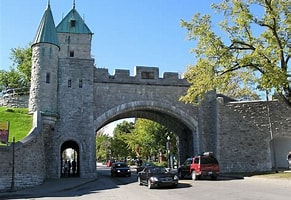
Today, I am proud to say that I passed Val-d’Or, Quebec and am heading towards Sakitawatbikak, Quebec. That is 4,561.4 km in 962 days or 60% of my journey! Over the last few years, I learned a lot about me and what I believe about myself and Canada. Ultimately, I learned that you do not have to leave your front yard to learn and grow. You can set an internal goal and grow from there!